



What is pin trading?
Put simply, pin trading means you collect Disney pins and swap them. Each pin is a little badge made of metal and enamel, with a fastener on the back, and it shows a character, a ride, a land, or an event. Every month brings fresh designs to the stores, and many are only made in small quantities.
Here’s how it works: you buy a few pins, keep some for yourself, and swap the rest. Most trades happen with Cast Members (Disney staff) who wear a lanyard covered in pins, but guests trade with each other too. That way, your collection grows a little with every visit.
The official name of the program is Disney Pin Trading, and you’ll also see the name DisneyPINS on some signs and displays. It’s the same activity, and most people just call it "pin trading."
Why does this tradition exist?
Organized pin trading started in the US Disney parks in the late 1990s, during the millennium celebrations. The idea was to bring guests closer to each other and to the Cast Members, around an object that’s easy to collect.
What it really comes down to is connection. A trade turns into a chat, a nice design catches your eye on a Cast Member’s lanyard, or you end up helping a little one track down their favorite character. I find it a really nice way to pass the time in line and get people talking, and once those first pins are bought, it doesn’t cost you a thing.
Kids love it too, because they can trade on their own, at their own pace.
How do you trade pins?
There are three ways to trade your pins at Disneyland Paris: with a Cast Member wearing a lanyard (the easiest and most common), on a trading board between guests, and at special events, some of which charge a fee. You can also trade informally with other guests you run into in the park, as long as everyone agrees. Here’s a closer look at each one.
Trading with a Cast Member (lanyard)
Wherever you go in the park, you’ll notice Cast Members with a lanyard (a strap worn around the neck) loaded with pins meant for swapping. For a first try, nothing is easier. Here are the steps to follow.
Spot a lanyard
Look for a Cast Member wearing a pin lanyard. Walk up and simply say hello.
Ask politely
Politely check that they’re open to a trade, with something like: "Hello, would you swap a pin with me?" Keep your hands off the lanyard and the pins until you’ve asked.
Offer your pins
Hold out two or three pins you’re ready to part with, and leave the choice to the Cast Member. Besides being good manners, this tends to make for the nicest swaps.
Pick yours
Now it’s your turn: find the pin you like on their lanyard and point it out. Trades are one for one, hand to hand.
Say thank you
Thank them, smile, and that’s it. Don’t have any pins to swap yet? The section further down tells you where to buy some. And you’re free to head over to another Cast Member for more trades.
Here are the ground rules. Pins are swapped one for one, and cash is never part of it. Whatever you hand over has to be a real Disney pin made of metal and in decent shape. Expect a refusal for a pin that’s chipped, bent, or has lost its back fastener, and forget about buttons or plastic badges. As a rule, each Cast Member will do 2 pins per day with the same guest, though nothing stops you from going to someone else for more.
It’s also best not to offer a pin they’re already wearing. As long as you ask nicely, a Cast Member will normally take any real pin, unless it’s a duplicate of one on their lanyard.
On the trading board
The second way to trade is the trading board (sometimes just called the "board"): a panel filled with pins, set out by the Pin Trading team for swaps between collectors, watched over by a Cast Member and following the same rules as lanyard trading.
The main meeting spot is Pueblo Trading Post in Frontierland, which carries the month’s new releases and has tables set up so you can lay out your collection and trade with other guests. From what I’ve seen, these swaps mostly happen on weekends, usually in the afternoon, and the board can move from one store to another during the day. Since the times aren’t set in stone, your best bet is to ask on the day itself, at City Hall or right in the store.
Many stores also have a small board: if it isn’t out, you can ask the team for it.
At special events
Disneyland Paris also hosts pin trading events several times a year. Some are free, others charge a fee and require a reservation: expect a theme, sometimes a buffet, and often one or more limited edition pins available only to participants. Spots are limited and go fast.
For limited edition pin releases, Disneyland Paris regularly uses an online booking system: you reserve a digital ticket ahead of time and show it on your device on the day.
Since the setup, the cost, and the calendar shift every year, I won’t commit to an exact figure. Just to give you a ballpark, a paid event usually runs a few dozen euros. Your safest move is to look up the official lineup around the time of your trip.
Types of pins
Some pins are much harder to find than others. Below are the main categories you’re likely to see. Among collectors, the etiquette is to swap within the same category (open edition with open edition, limited edition with limited edition).
| Type | Description | Availability |
|---|---|---|
| Open Edition (OE) | An open edition, made in large numbers. These are the most common pins, perfect for beginners and for trading. | Common |
| Limited Edition pins (LE) | A limited, numbered edition (for example 250/600). A fixed, stated run, often tied to a date or a theme. | Sought after |
| Limited Release (LR) | Released for a specific period or event, with no announced edition size, then retired. | Sought after |
| Event or anniversary pins | Made for a season, a celebration, or one of the park’s birthdays. These are frequently limited editions. | Varies |
| Cast Member trading pins (including Hidden Mickeys) | The pins on Cast Member lanyards, there to be swapped. Hidden Mickeys belong to their own series, each one bearing a tiny tucked-away Mickey. | Trade only |
The main families of Disney pins
How can you spot a fake pin (scrapper)?
Unofficial copies of Disney pins, called "scrappers," make the rounds on lanyards and boards. To spot a real pin, look mainly at the enamel (smooth and shiny) and the back (Disney marking and © symbol cleanly engraved). Here are the signs to know.
Tips for getting started
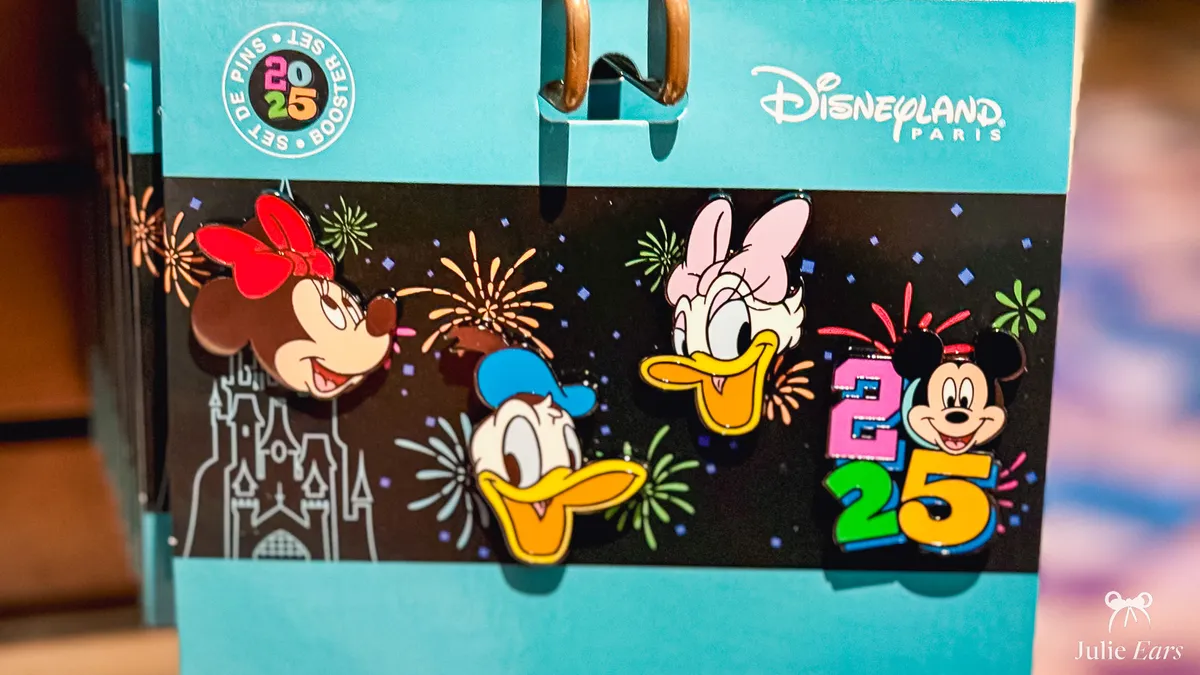
- Buy your first pins in the park. The two main places to shop are Pueblo Trading Post (Frontierland) and Harrington’s (Main Street, U.S.A.), and World of Disney, in Disney Village, sells pins too. Look for sets or boxes, which cost less.
- Set a budget. Expect a single new pin to cost somewhere between a few euros and around ten euros, depending on the design (prices change, so double-check in the store). Per pin, a boxed set is often the better deal.
- Don’t go big right away. There’s no point spending much at the start: a handful of pins will get you through your first swaps and show you whether this hobby is for you.
- Set aside your doubles for swapping. A pin you own twice, or one that no longer appeals to you, is the perfect trading material. Your favorites can stay safely in your collection.
- Choose a theme if you like. Lots of collectors stick to a single character, land, or ride. It gives your collection a clear focus and gets conversations going.
- Be courteous and patient. Greet people, ask before you touch anything, and thank them. These basics are what keep the hobby pleasant for all involved.
Affiliate link · Disney’s official prices
Dig deeper
Pins are only one of many souvenir ideas. For the bigger picture, check out what souvenirs to bring back from Disneyland Paris. And if you’re wondering where to shop for pins and everything else, take a look at all the stores in the park.
Frequently asked questions
01 Where can I buy pins at Disneyland Paris?
The two go-to spots are Pueblo Trading Post, in Frontierland, and Harrington’s, on Main Street U.S.A. You’ll also find them at World of Disney, in Disney Village. Look for pin sets and boxed collections to get started for less.


