



What is pin trading?
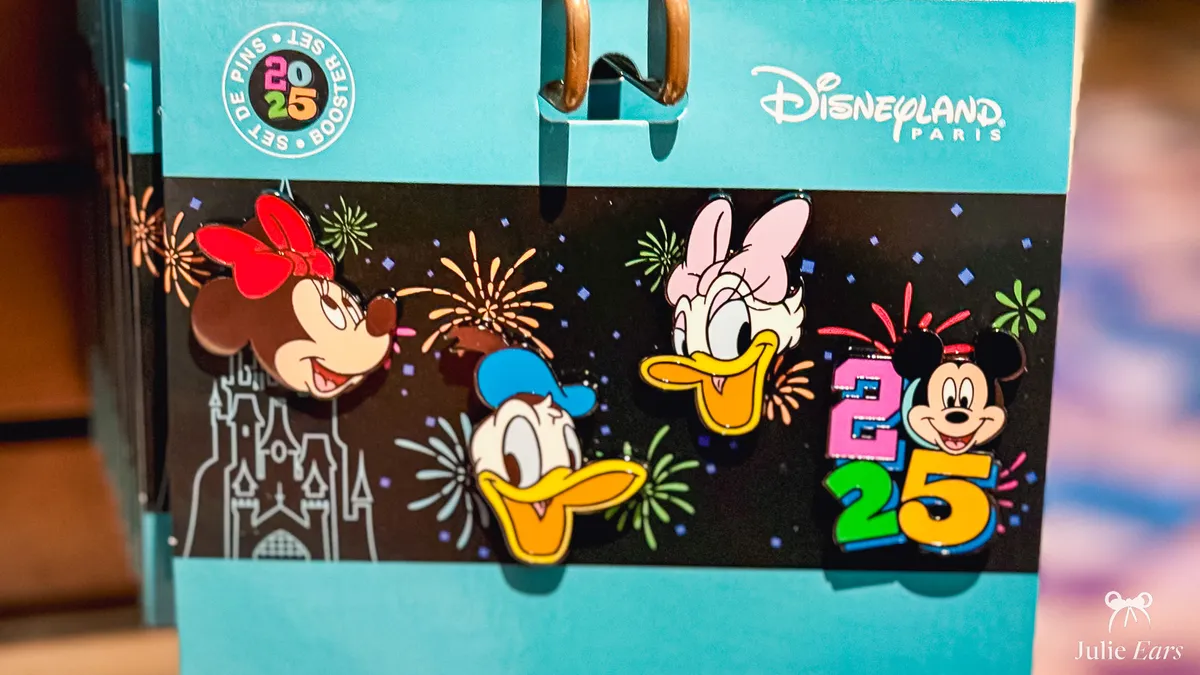
Pin trading means collecting and swapping Disney pins. A pin is a small enamel metal badge with a clasp on the back, featuring a character, a ride, a land or an event. New designs come out in the shops every month, often in limited quantities.
It’s simple: you buy a few pins, keep some for yourself and trade the others. Most trading happens with Cast Members (the park staff) who wear a lanyard covered in pins, but also between visitors. That way you build up your collection visit after visit.
The programme is officially called Disney Pin Trading. You’ll also see the name DisneyPINS on some signs and displays. The activity is the same, and most people simply call it "pin trading".
Why does this tradition exist?
Organised pin trading started in the American Disney parks in the late 1990s, during the millennium celebrations. The idea was to bring visitors together, and closer to the staff, around a simple object to collect.
Above all, it’s about sharing: you swap a pin, you chat, you spot a lovely piece on a Cast Member’s lanyard, you help a child find the character they’re looking for. I find it a lovely way to pass the time in queues and strike up a conversation, without spending anything more once you’ve bought your first pins.
Kids love it too, because they can trade by themselves, at their own pace.
How to trade your pins
There are three ways to trade your pins at Disneyland Paris: with a Cast Member wearing a lanyard (the easiest and most common), on a trading board between visitors and at dedicated events, some of them paid. You can also trade informally with other visitors you meet in the park, as long as everyone agrees. Here are the details of each.
Trading with a Cast Member (lanyard)
All over the park, some Cast Members wear a lanyard (a cord around the neck) covered in pins, there for trading. It’s the easiest way to get started. Here’s how to do it, step by step.
Spot a lanyard
Look for a Cast Member wearing a pin lanyard. Go up to them and simply say hello.
Ask politely
Ask whether you can trade a pin, for example: "Hello, would you be happy to trade a pin?" Never touch the lanyard or the pins without asking.
Offer your pins
Show two or three of your trading pins and let the Cast Member choose the one they like. It’s more polite and it often leads to the best trades.
Choose yours
Now it’s your turn: spot the pin you like on their lanyard and point it out. The trade is one for one, hand to hand.
Say thank you
A thank you, a smile and you’re done. No pins to trade yet? See below for where to buy some. You can also go and find another Cast Member to keep going.
A few rules to know. A pin is traded for a pin, never for money. The pin you offer must be a real Disney metal pin, in good condition: a chipped or bent pin, or one without a clasp on the back, may be refused, and buttons or plastic badges aren’t accepted. Generally, the limit is 2 pins per day with the same Cast Member, but you can go to another one to trade more.
Also avoid offering a pin that’s already on their lanyard. A Cast Member will generally accept any real pin offered politely, unless they already have it on their lanyard.
On the trading board
The second way to trade is the trading board (sometimes just called the "board"): a panel full of pins, provided by the Pin Trading team for swaps between collectors, supervised by a Cast Member and with the same rules as for lanyards.
The main meeting point is the Pueblo Trading Post, in Frontierland, which stocks the month’s new pins and where tables are set up so visitors can lay out their collections and trade with each other. From what I’ve seen, these swaps mostly happen at the weekend, usually in the afternoon, and the board can move from one shop to another during the day. As the times aren’t fixed, the best thing is to ask on site on the day, at City Hall or directly in the shop.
Many shops also have a small board: if it isn’t on display, you can ask the team for it.
At dedicated events
Disneyland Paris also holds pin trading events several times a year. Some are free, others are paid and need booking: they have a theme, sometimes a buffet and often one or more limited-edition pins reserved for participants. Places are limited and go fast.
For limited-edition pin releases, Disneyland Paris regularly uses an online booking system: you book a digital ticket in advance and show it on your device on the day.
Formats, prices and dates change from year to year, so I’d rather not quote a firm price. As a rough guide, allow a few dozen euros for a paid event. The best thing is to check the official programme at the time of your trip.
Types of pins
Not all pins are equal when it comes to rarity. Here are the main families you’ll come across. Good practice between collectors: the custom is to trade like for like (an open edition for an open edition, a limited edition for a limited edition).
| Type | Description | Availability |
|---|---|---|
| Open Edition pins (OE) | Open edition, produced in large quantities. These are the most common pins, perfect for beginners and for trading. | Common |
| Limited Edition pins (LE) | Limited and numbered edition (for example 250/600). A fixed, stated edition size, often linked to a date or a theme. | Sought after |
| Limited Release pins (LR) | Released for a specific period or event, with no stated edition size, then withdrawn. | Sought after |
| Event or anniversary pins | Released for a season, a celebration or a park anniversary. Often a limited edition. | Varies |
| Cast Member trading pins (including Hidden Mickeys) | Pins worn by Cast Members on their lanyards, just for trading. Hidden Mickeys are a special series, marked with a small hidden Mickey. | Trading only |
The main families of Disney pins
How to spot a fake pin (scrapper)
Unofficial copies of Disney pins, known as "scrappers", turn up on lanyards and boards. To spot a real pin, look mainly at the enamel (smooth and shiny) and the back (Disney marking and © symbol clearly engraved). Here are the things to check.
Tips for beginners
- Buy your first pins in the park. Pueblo Trading Post (Frontierland) and Harrington’s (Main Street, U.S.A.) are the two go-to shops. You’ll also find pins at World of Disney, in Disney Village. Look for packs or boxed sets, which work out cheaper.
- Plan your budget. A single new pin usually costs anywhere from a few euros to around ten euros depending on the design (check on site, prices change). Boxed sets often work out cheaper per pin.
- Start small. No need to spend a lot at first: a few pins are enough to make your first trades and see whether you enjoy it.
- Keep your duplicates for trading. If you have a duplicate of a pin you like, or one you no longer like, that’s exactly what trading is for. No need to give up your favourites.
- Pick a theme (optional). Many collectors focus on one character, land or ride. It gives your collection a direction and sparks good conversations.
- Stay polite and patient. Say hello, ask before touching and say thank you. It’s the basics, and it’s what makes this activity enjoyable for everyone.
Affiliate link · official Disney prices
Further reading
Pin trading is one of many ways to go home with a souvenir. For the full picture, see which souvenirs to bring home from Disneyland Paris. And to find out where to buy your pins and other finds, browse all the shops in the park.
Frequently asked questions
01 Where can I buy pins at Disneyland Paris?
The two go-to places are the Pueblo Trading Post, in Frontierland, and Harrington’s, on Main Street, U.S.A. You’ll also find them at World of Disney, in Disney Village. Look out for bundles and gift sets to get started for less.


